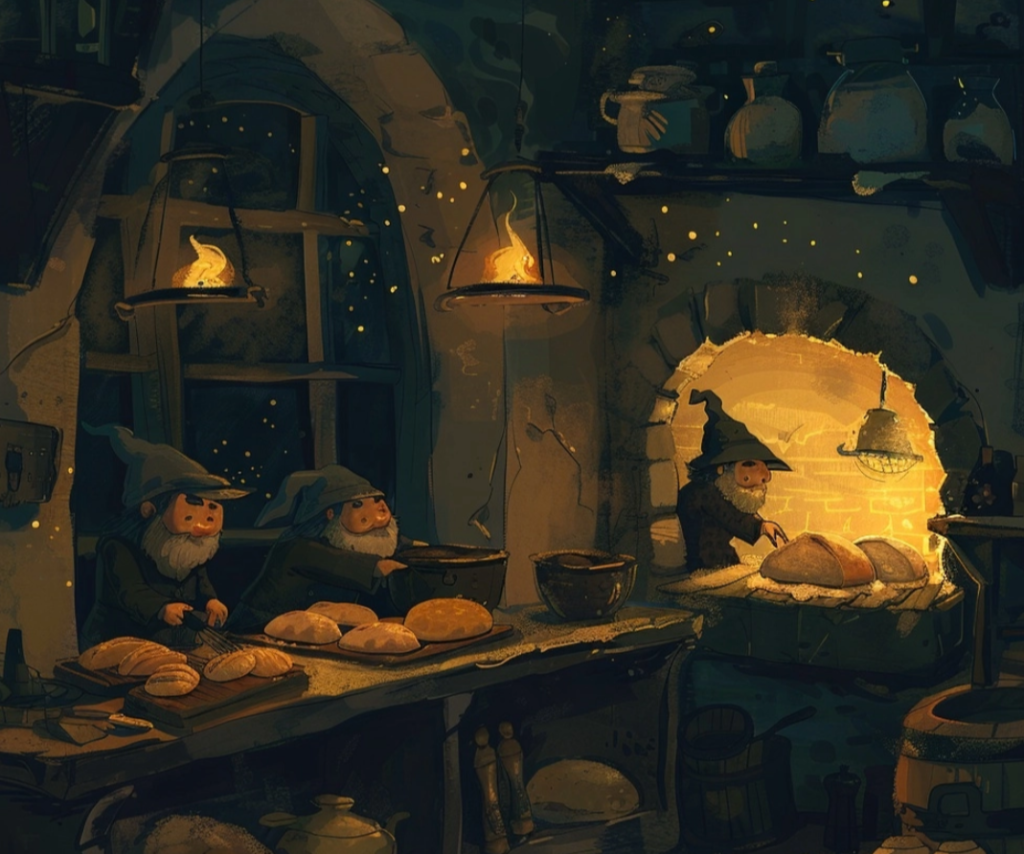
German literature corner

Timeless:
Learning from German Literature

English translations, simplified German versions & background explanations

Literature forms a core part of cultural identity—within nations and across borders where a language is shared.

This collection of poems and rhymes, taught in schools across the German speaking region, is designed not only to illustrate grammar and vocabulary, but also to lead readers into unexpected and lesser-known explorations.
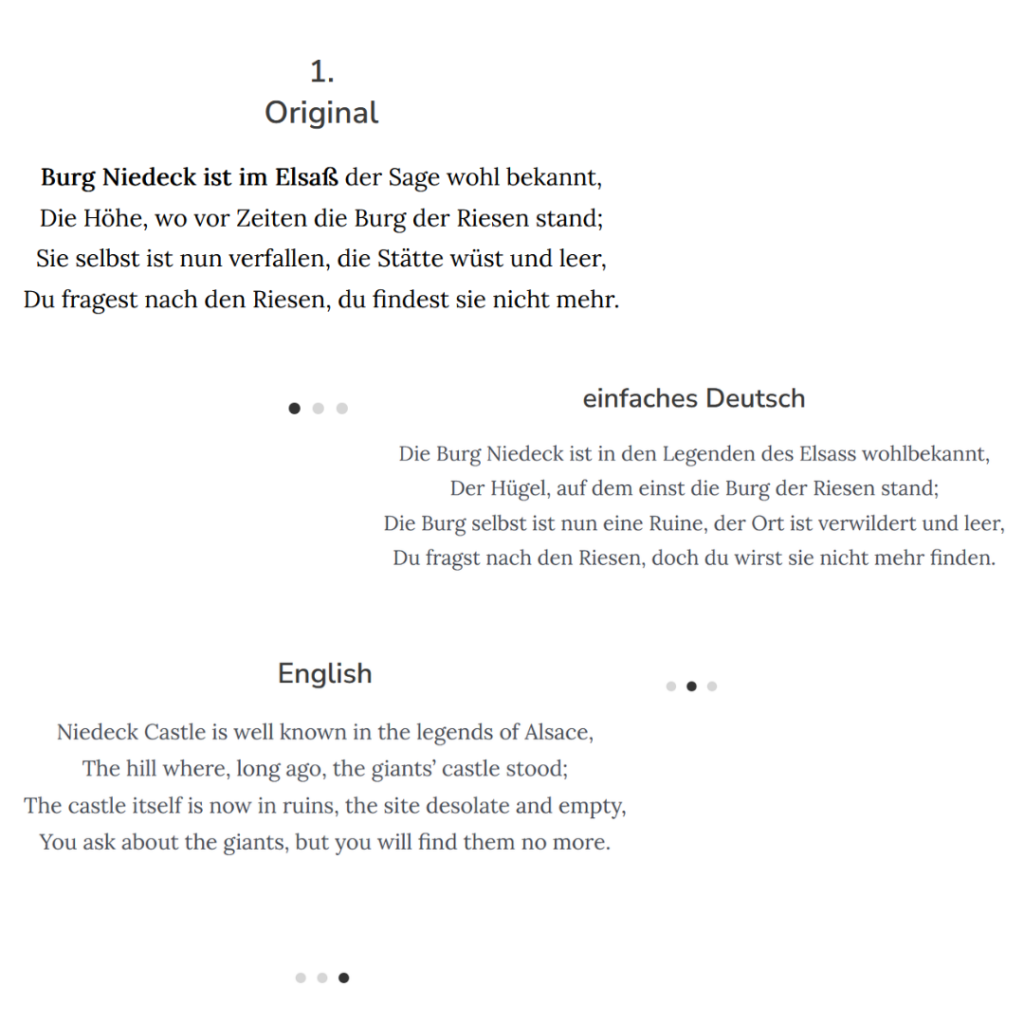
Translations into contemporary German and English
Background information and fun facts
Links to other resources

While interpretations of poems of Goethe and Schiller are easy to find in Reclam editions, on Wikipedia, or elsewhere, this approach offers something different:

Who else would pair a poem with a Google Maps hiking tour or even a wine route inspired by a ballad of Adelbert von Chamisso?

The Giant’s Toy
(Das Riesenspielzeug,
la légende du Nideck)

This ballad by Adalbert von Chamisso from the 19th century is about a giant girl from Alsace who mistakes a farmer for a toy and then shows her new plaything to her father.

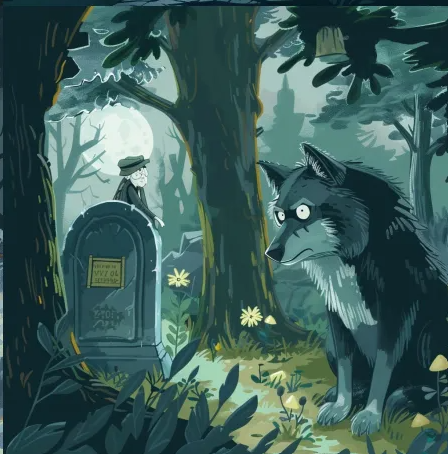
Der Werwolf fragt den Lehrer nach den Fällen

The Werewolf
(Der Werwolf)

This little poem by Christian Morgenstern provides a fun, intuitive way to learn noun declensions, letting you absorb the grammar through the flow of the verse rather than through traditional grammar tables.