Resources
Below, you’ll find free learning material for German grammar and vocabulary inspired by German poems, newspaper articles, and readers’ commentaries.

For those who don’t use Instagram, a selection of the posts (chosen from a collection of more than 50) is available to download as PDF files. The @deutsch_encore Instagram account is organized into three main sections:
👉🏻Deutsch aus Nachrichten und Kommentaren – German as used in news and commentary
👉🏻Deutsch für Fachkräfte/Geschäftsdeutsch – German for skilled workers/business German
👉🏻Deutsch auf allen CEFR-Sprachniveaus A1 – C2 – German on all CEFR levels
The posts are available in German with English translations. If you’d like to stay up to date and never miss a post, I’d be happy to send you updates via email or WhatsApp. 📧
Deutsch aus Nachrichten und Kommentaren – German as used in news and commentary
You want to know what’s on the news in Germany, Austria and Switzerland? 🇩🇪🇦🇹🇨🇭
In this section, you’ll find material not only from the news but also from the discussions in the commentary section it inspires. Thus we can explore how readers perceive and respond to the news.
✅natural word choice, metaphors and synonyms
✅typical native speaker mistakes explained
✅stay up to date with hot topics that move the netizens from the DACH region
PDFs for download:
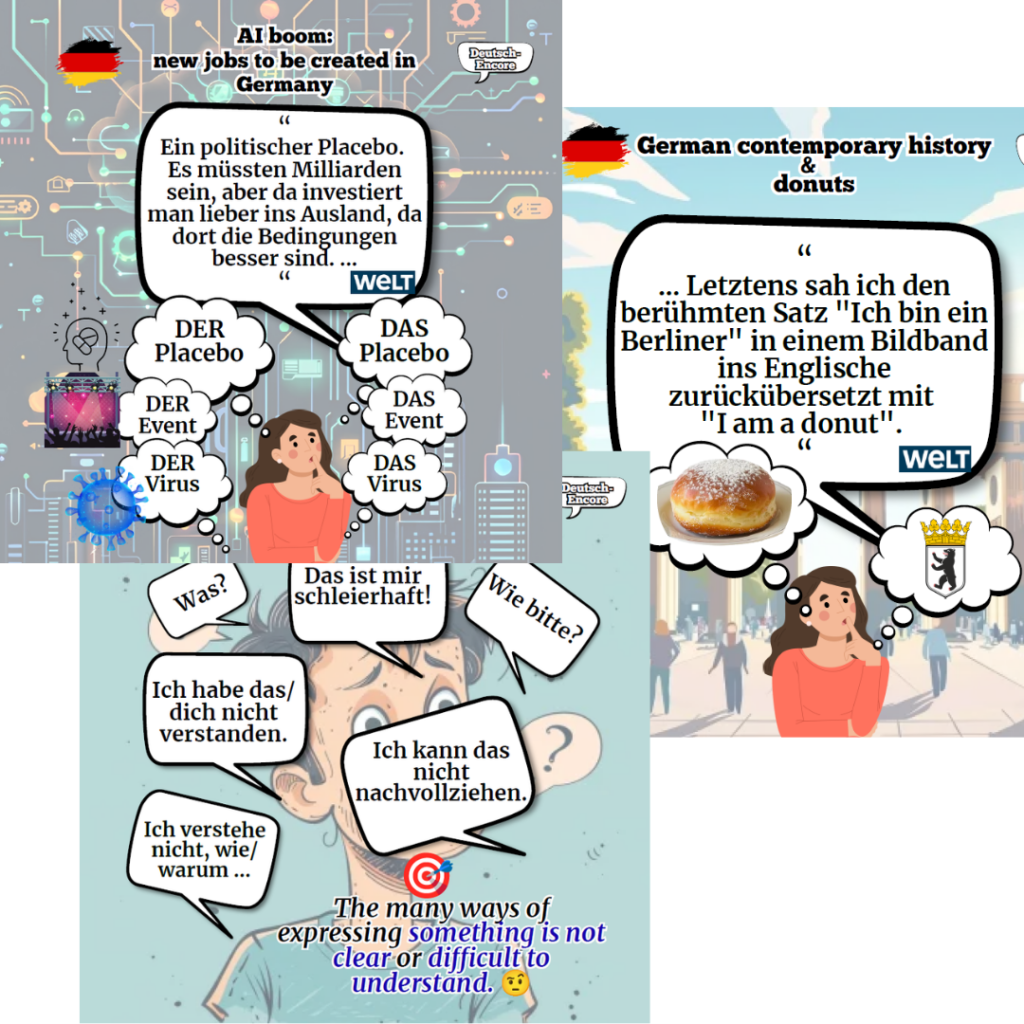
👉🏻 der, die UND/ODER das – some nouns have more than one article (A2/B1)
👉🏻 »Ich bin ein Berliner! » – German-US contemporary history & donuts🍩 (B1/B2)
👉🏻 Alles klar?- The many ways of expressing something is not clear or difficult to understand. 🤨
Deutsch für Fachkräfte/Geschäftsdeutsch – German for skilled workers/business German
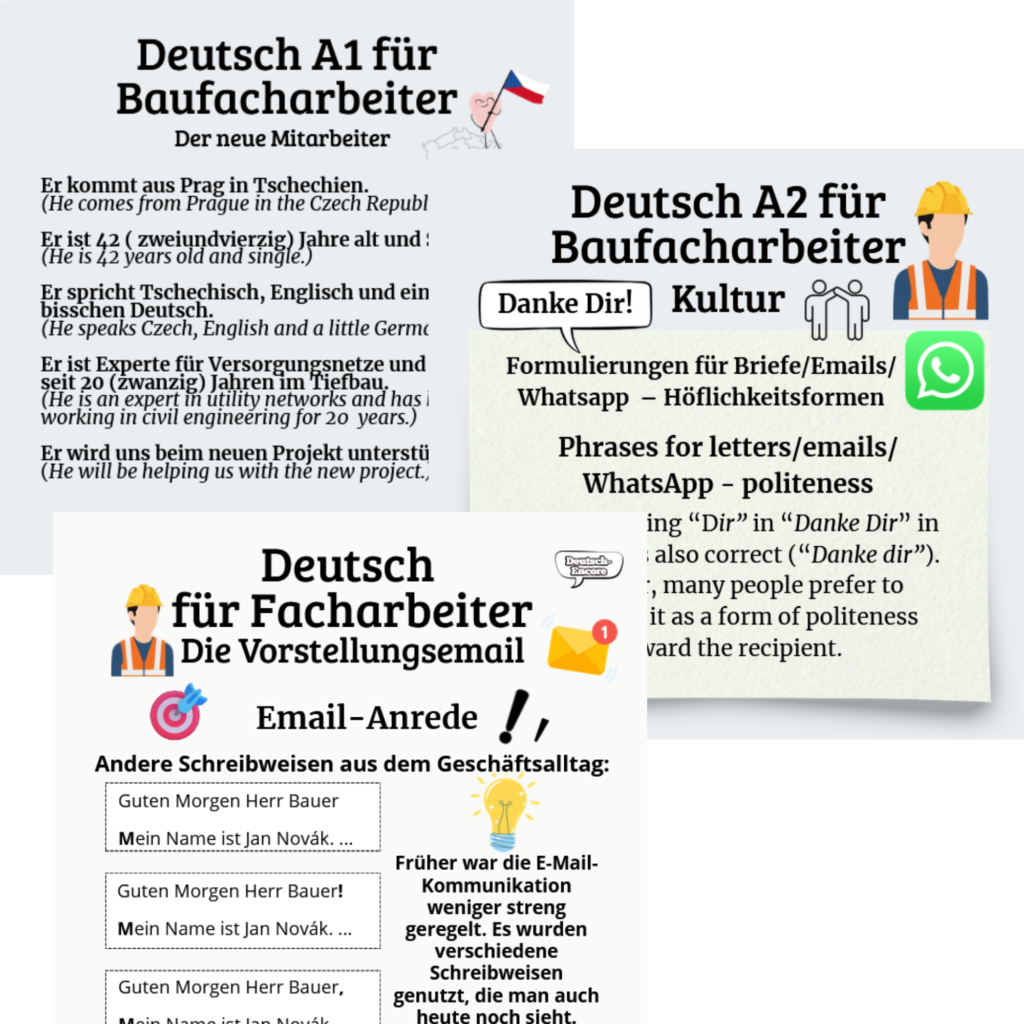
This section is dedicated to German for professional contexts. It includes German texts, their English translations and insights drawn from my own work experience. It is intended for students and skilled workers who want to build workplace vocabulary early in their learning journey—whether in fields such as civil engineering or import/export—or for more advanced learners looking for inspiration for their next business email.
PDFs for download:
👉🏻 Introducing yourself or a new employee (A1 – Skilled Construction Worker/Civil Engineer)
👉🏻 Filling out an order form (Reading Exercise A2 – Import/Export or Skilled Worker)
👉🏻 The Introduction Email: An authentic business email & salutation
Deutsch auf allen CEFR-Sprachniveaus A1 – C2 – German on all CEFR levels
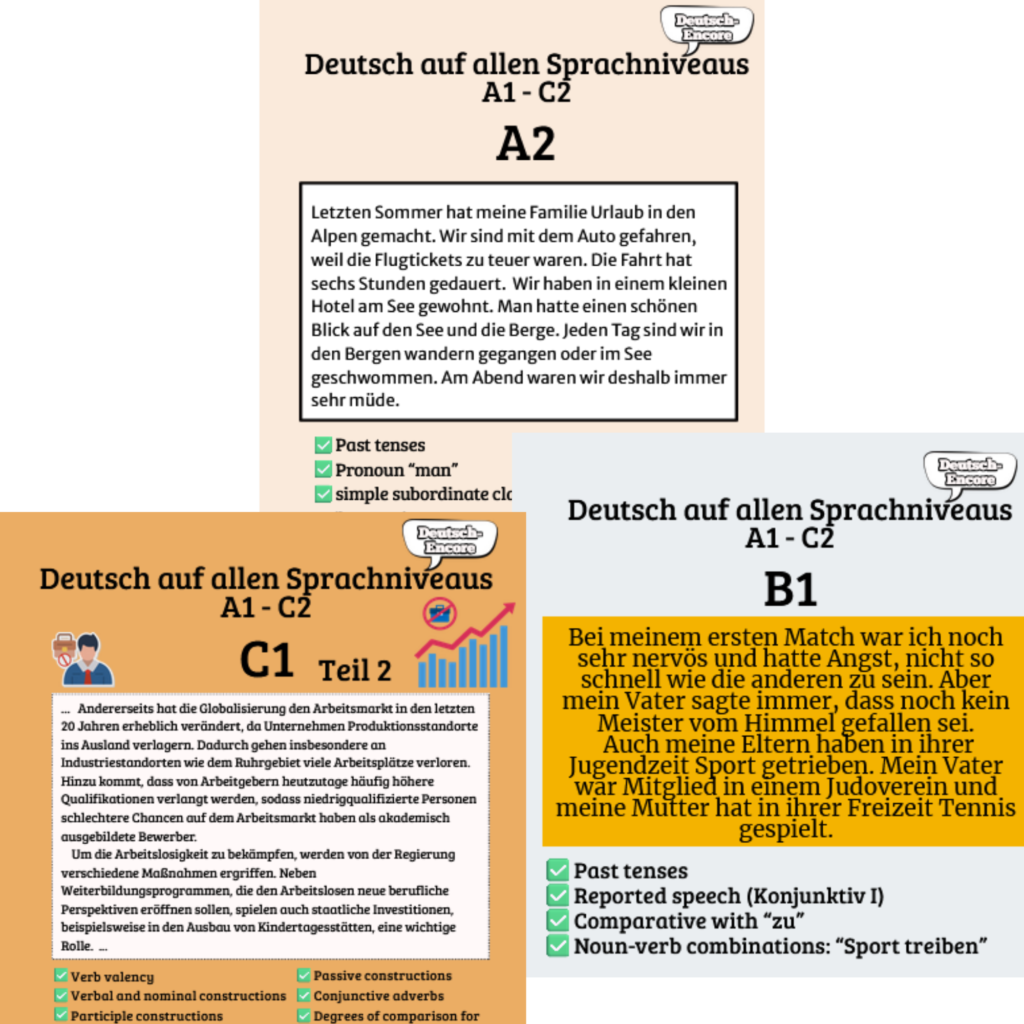
Language proficiency is often divided into a series of levels. For German, these levels are defined by the Common European Framework of Reference for Languages (CEFR). Below, you will find example texts for each CEFR level, accompanied by explanations and descriptions of the key vocabulary, grammar, and language features that characterize each stage of proficiency.